

Roll converting software for real-time material tracking, unit conversion, and production control.
Track rolls, sheets, pounds, feet, yards, scrap, butt rolls, WIP, labels, scale readings, customer-owned materials, and shipments with BellHawk and MilramX.
Roll converting is more complex than standard inventory tracking. A single parent roll may be received by weight, issued by footage, converted into multiple child rolls, cut into sheets, returned as a butt roll, recorded as scrap, relabeled for a customer, and shipped in a different unit of measure. KnarrTek’s BellHawk and MilramX platforms help roll converters, coaters, laminators, printers, slitters, die-cutters, packaging teams, and specialty material processors manage that full material story in real time.
Instead of relying on paper travelers, handwritten production logs, manual unit conversion spreadsheets, disconnected warehouse updates, or delayed ERP entries, BellHawk captures roll converting activity as it happens. Teams can scan barcodes, capture RFID reads, print labels, update WIP, record material consumption, connect weighing scales, manage scrap, track butt rolls, and synchronize validated production data with ERP, accounting, customer, supplier, and reporting systems.
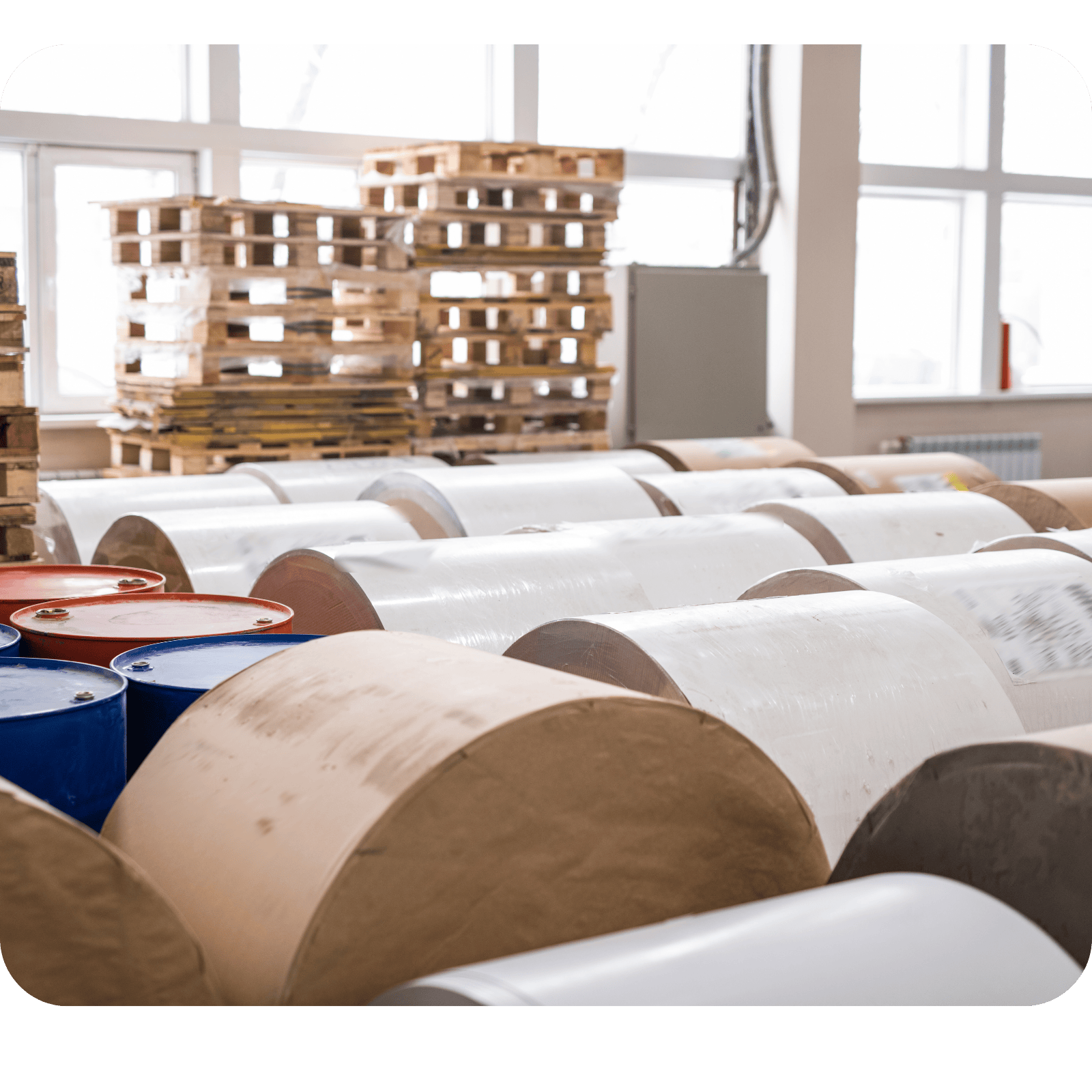
Roll converting software needs to follow material transformations, not just inventory balances.
In a standard warehouse, inventory may be tracked by item number, quantity, lot, and location. In a roll converting operation, that is not enough. A parent roll may be partially consumed. A roll may become multiple smaller rolls. A material may be coated, laminated, printed, slit, die-cut, rewound, sheeted, packaged, kitted, returned, scrapped, or reused. Each step can change the quantity, unit of measure, label, customer order, quality status, or inventory value.
BellHawk helps roll converters track those changes with real-time material records. The system can capture receiving details, supplier lots, customer-owned materials, roll IDs, container IDs, license plate numbers, weights, footage, widths, thicknesses, sheet counts, work orders, operator activity, process steps, quality checks, scrap, rework, butt rolls, labels, finished goods, shipments, and ERP updates. This gives production, warehouse, quality, customer service, and management teams a clearer view of what happened to every material.
KnarrTek roll converting software is designed for companies working with paper, plastic, films, textiles, woven materials, non-woven materials, coated materials, laminated materials, flexible packaging, labels, specialty substrates, medical materials, industrial materials, and customer-specific roll or sheet products. The goal is to help teams reduce manual paperwork, prevent conversion errors, minimize waste, protect reusable inventory, improve production visibility, and keep business systems aligned with shop-floor activity.
This page is structured around the questions roll converters ask most often. How do we track rolls in pounds and feet? How do we know how much material is left? How do we track butt rolls? How do we capture scrap and rework? How do we connect scale readings to inventory? How do we print labels when material changes form? How do we keep ERP records accurate without waiting until the end of the shift? BellHawk and MilramX help answer those questions with a connected operational platform.
Control materials that move between pounds, feet, yards, sheets, rolls, pallets, and customer-specific units.
Roll converting teams often need to manage the same material in several different ways. BellHawk helps create a single material record that can follow changing quantities, units, labels, containers, production states, and shipment events.
Scale data, barcode scans, RFID reads, and operator inputs can be used together to improve inventory calculations and reduce manual conversion mistakes.
Each roll, sheet bundle, pallet, tote, box, or intermediate material can receive its own barcode or RFID identity so movement stays traceable.
MilramX helps exchange validated inventory and production updates with ERP or accounting systems so business data stays closer to reality.
Give each roll, sheet, bundle, and converted material a traceable digital history.
A material passport is a complete operational story. It shows where a material came from, what it was, how it moved, how it changed, who worked on it, how much was consumed, what labels were printed, what was scrapped, what was returned to stock, and what shipped to the customer.
Receive and identify
Capture supplier, purchase order, customer-owned material, lot, roll ID, serial number, weight, length, width, thickness, and receiving location.
Store and move
Track putaway, location transfers, pallet movement, staging, quarantine, customer-owned material segregation, and inventory adjustments.
Convert and consume
Record work order activity, operator scans, machine steps, coating, laminating, printing, slitting, die-cutting, cutting, packaging, and material consumption.
Label and inspect
Print labels for raw rolls, child rolls, intermediate materials, sheet packs, finished goods, scrap, rework, and shipments while recording quality checks.
Return or reuse
Track butt rolls, leftover chemicals, offcuts, returned material, reusable WIP, recyclable scrap, and inventory that can be used on a future job.
Ship and synchronize
Connect finished goods with customer orders, packing records, shipment data, labels, delivery history, and ERP or accounting updates.
5 essential benefits of roll converting software for real-time material control.
BellHawk and MilramX help roll converters improve accuracy, protect material value, reduce manual work, and make production decisions using data that reflects what is happening on the floor.
Track materials the way converters actually use them.
BellHawk supports roll tracking across multiple units of measure, including pounds, feet, yards, sheets, rolls, pallets, thickness, width, and weight. This helps teams avoid the confusion that comes from recording one quantity in ERP, another quantity on the production floor, and another quantity in a spreadsheet. The system can help connect each unit of measure to the same material identity so the team understands the full inventory picture.
Follow WIP through printing, coating, slitting, cutting, and die-cutting.
Roll converting production often includes many steps and transformations. BellHawk can capture WIP movement through printing, coating, laminating, slitting, die-cutting, rewinding, packaging, kitting, and customer-specific operations. Managers can see where work is active, where material is waiting, which jobs consumed material, and what finished output was produced.
Recover value from leftover material instead of losing it in the process.
Butt rolls, scrap, offcuts, leftover chemicals, and partial materials can represent real inventory value. BellHawk helps teams record these materials when they are created, returned, reused, scrapped, or recycled. This reduces the chance that usable material is forgotten, counted incorrectly, or purchased again when it was already available.
Print labels when materials change form, quantity, or ownership.
Labeling is critical in roll converting because material identity can change at each production step. BellHawk can help print barcode labels for raw materials, intermediate materials, child rolls, sheet bundles, customer-owned materials, finished goods, scrap, rework, and shipments. Label automation helps keep inventory, traceability, and shipping records aligned.
Use weight data to improve material quantity and inventory accuracy.
Weighing scales can help roll converters estimate remaining material, validate received quantities, calculate roll length, confirm sheet counts, update inventory, and support job costing. BellHawk can use scale data as part of the material record, reducing manual calculations and helping teams maintain more accurate inventory.
Support roll converting operations from receiving through production, packaging, and multi-site inventory control.
BellHawk supports a wide range of converting workflows. The system is especially useful when materials change form, units of measure change during production, labels must be printed at each step, and finished goods must be connected to customer orders. This makes BellHawk a strong fit for teams that process paper, plastic, films, textiles, woven materials, non-woven materials, coated materials, laminated materials, labels, flexible packaging, and specialty substrates.
Track materials as they move through coating lines, printing stations, laminating steps, curing, inspections, label changes, and finished roll updates.
Manage parent rolls, child rolls, sheet output, scrap, rework, offcuts, WIP materials, and production quantities with barcode or RFID identity.
Connect finished rolls, sheet packs, boxes, pallets, labels, kitting activity, customer-specific packaging, shipment records, and order fulfillment.
Coordinate inventory, production, transfers, customer-owned materials, and shipping activity across multiple facilities, warehouses, or production areas.

Build a real-time workflow from receiving to finished shipment.
BellHawk helps create a connected workflow that captures the key moments in a roll converting operation. Each scan, label, scale reading, move, production step, and shipment can become part of the material record. This helps teams understand where material came from, what happened to it, how much remains, and where it went.
Scan raw rolls, customer-owned materials, supplier lots, purchase orders, weights, lengths, containers, and receiving locations.
Track printing, coating, slitting, cutting, die-cutting, laminating, rewinding, packaging, quality checks, and production changes.
Record butt rolls, scrap, offcuts, rework, leftover chemicals, returned material, and reusable inventory so material value remains visible.
Connect finished rolls, sheets, packages, labels, pallets, customer orders, shipments, and ERP updates to the material history.
Use intelligent automation to keep roll converting data moving between BellHawk and business systems.
MilramX is a real-time, rules-based decision support platform that enhances coordination and data exchange in roll converting operations. It can connect BellHawk with ERP, QuickBooks, Oracle, label systems, databases, customer systems, supplier systems, scales, reporting tools, and other operational systems.
Share receiving, production, inventory, shipment, and job costing updates with business systems.
Use scale readings, barcode scanners, RFID readers, terminals, and mobile devices to capture validated production data.
Connect label printing, customer-specific order requirements, shipping records, and traceability data.
Support automated alerts, data validation, exception handling, and IT support workflows when connected processes need attention.
Reduce waste, improve visibility, and extend legacy systems with real-time roll converting data.
KnarrTek’s BellHawk and MilramX platforms address the roll converting industry’s challenges of complex unit conversions, manual processes, inaccurate inventory, delayed production updates, and material waste.
Improve confidence in roll, sheet, and material quantities.
Real-time scanning, scale integration, and label tracking help reduce errors that come from handwritten counts and delayed updates.
Track scrap and reusable inventory before value disappears.
Butt rolls, offcuts, scrap, leftover chemicals, and rework can be captured as part of the production record.
See where each material is in the converting process.
Managers can monitor WIP, jobs, production steps, labels, finished goods, and shipment readiness in real time.
Reduce manual work and prevent avoidable mistakes.
Replacing paper forms, duplicate entry, and manual conversion sheets can help reduce labor and error costs.
Answer customer questions with better material history.
Teams can see what was received, what was converted, what remains, and what shipped for customer-owned or customer-specific materials.
Connect operational data with ERP and accounting systems.
MilramX helps extend existing systems by connecting real-time shop-floor events with business records.
Explore white papers on roll tracking, material traceability, RFID, WIP, and inventory accuracy.
Use these resources to support internal planning, compare barcode and RFID tracking, understand materials traceability, prevent inventory errors, and improve tracking for sheets, rolls, and lengths of material.
Open White Paper LibraryTracking Sheets, Rolls, and Lengths of Material
Explore tracking methods for roll-based materials, sheets, lengths, and variable inventory units.
Open PDF Inventory AccuracyPreventing Inventory Errors
Learn how better scanning, labeling, and tracking can reduce wrong counts and missing materials.
Open PDF TraceabilityInventory Tracking vs. Materials Traceability
Understand how inventory visibility differs from a full material history from receiving to shipment.
Open PDF WIP TrackingBarcodes vs RFID for WIP Tracking
Compare barcode and RFID tracking methods for production, WIP visibility, and material movement.
Open PDFReady to replace manual roll tracking with real-time production and inventory visibility?
BellHawk and MilramX help roll converters, coaters, laminators, printers, slitters, die-cutters, packaging teams, and material processors track complex materials with more accuracy, less paperwork, and better decision support.
Roll converting software FAQs for converters, coaters, printers, packaging teams, and material processors.
These answers help teams compare roll converting software, inventory tracking, WIP tracking, barcode scanning, RFID tracking, scale integration, material traceability, scrap tracking, and ERP integration across the United States.
What is roll converting software?
Roll converting software helps companies track roll-based materials through receiving, storage, production, conversion, scrap, rework, labeling, packaging, and shipment. BellHawk supports roll converters that need to track materials by roll, sheet, pounds, feet, yards, width, thickness, weight, and customer order.
How does BellHawk track multiple units of measure?
BellHawk can track materials using multiple units of measure, including pounds, feet, yards, sheets, rolls, pallets, and other material attributes. This helps roll converters manage material transformations without relying on separate manual conversion spreadsheets.
Can BellHawk track butt rolls, scrap, and leftover material?
Yes. BellHawk can track butt rolls, leftover materials, recyclable scrap, rework, offcuts, chemicals, and reusable inventory. This helps teams reduce waste, recover material value, and maintain more accurate accounting records.
Does BellHawk support barcode scanning and RFID tracking?
Yes. BellHawk supports barcode scanning, RFID tracking, label printing, mobile data capture, shared workstations, and connected devices. These tools help identify rolls, sheets, containers, pallets, WIP materials, finished goods, and shipments as they move.
Can roll converting software connect to weighing scales?
Yes. BellHawk can interface with weighing scales to help calculate material quantities, roll lengths, sheet counts, inventory adjustments, and production usage. This is useful when weight data is needed to estimate remaining material or converted output.
What roll converting operations does BellHawk support?
BellHawk supports printing, coating, laminating, slitting, cutting, die-cutting, packaging, kitting, receiving, inventory control, WIP tracking, label automation, quality checks, scrap tracking, and shipping.
Can BellHawk track customer-owned materials?
Yes. BellHawk can help track customer-owned materials from receiving through production and shipment. This helps converters show what was received, what was used, what remains, what was converted, and what was shipped back to the customer.
How does MilramX help roll converting operations?
MilramX helps exchange validated BellHawk data with ERP, accounting, QuickBooks, Oracle, customer systems, supplier systems, label systems, databases, and reporting tools. It can also support automated alerts, error handling, and decision support workflows.
Can BellHawk improve roll converting inventory accuracy?
Yes. BellHawk improves inventory accuracy by capturing receiving, putaway, movements, production consumption, conversions, scale readings, scrap, rework, label events, finished goods, picking, packing, and shipping activity in real time.
What industries use roll converting tracking software?
Roll converting tracking software is useful for paper converters, plastic converters, film processors, flexible packaging operations, textile processors, woven and non-woven material producers, label printers, coaters, laminators, die-cutters, and specialty material manufacturers.
Where does KnarrTek provide roll converting software support?
KnarrTek supports roll converting software projects for manufacturers, converters, processors, distributors, and industrial operations across the United States, including New England, the Southeast, the Midwest, and other manufacturing regions.
How do I know if BellHawk is a fit for my roll converting operation?
BellHawk may be a strong fit if your team tracks rolls, sheets, pounds, feet, scrap, butt rolls, labels, scale data, WIP, inventory, and shipments manually or through disconnected systems. A workflow review can help identify where barcode scanning, RFID, scale integration, and ERP-connected data would provide the most value.
