
Chemical Traceability Solutions for Batch, Material, and Quality Visibility
Chemical traceability solutions from KnarrTek connect raw materials, lots, batches, work-in-process, containers, quality status, labels, and shipments in real time. Chemical manufacturers can capture activity where work happens, strengthen batch genealogy, and exchange selected operational data with ERP, LIMS, reporting, and supply-chain systems.
What are chemical traceability solutions?
Chemical traceability solutions create a connected digital history for raw materials, formulations, production batches, work orders, operators, equipment, quality events, containers, labels, and customer shipments. They help authorized teams determine which source lots entered a batch, where material moved, what process occurred, which quality status applied, and which finished lots or shipments may be affected.
KnarrTek chemical traceability solutions and chemical manufacturing software capture these transactions through configured barcode, RFID, mobile, workstation, scale, label, and system-integration workflows. The result is a searchable operational record from receiving through production and distribution.
Source-to-Batch Genealogy
Connect supplier lots and containers with batches, intermediates, finished products, and shipments.
Real-Time Batch Status
See active, waiting, held, tested, released, packaged, or completed work.
Quality Status Visibility
Connect quarantine, sampling, approval, rejection, rework, and release decisions.
Connected Operations
Exchange selected records with ERP, LIMS, reporting, shipping, and customer systems.
Build chemical traceability around the transactions that create risk and value.
Effective chemical traceability solutions do more than store finished-batch records. They capture material identity, process activity, status changes, container relationships, and system updates as the operation moves.
Identify
Assign or capture material, lot, batch, container, asset, location, and work-order identifiers.
Transact
Record receiving, movement, issue, dispense, consumption, output, return, adjustment, and shipment.
Validate
Apply configured checks for identity, quantity, status, location, expiration, label, and destination.
Connect
Link source lots with recipes, batches, quality decisions, containers, finished lots, and customers.
Respond
Use current records, reports, alerts, and integrations to investigate exceptions and coordinate action.
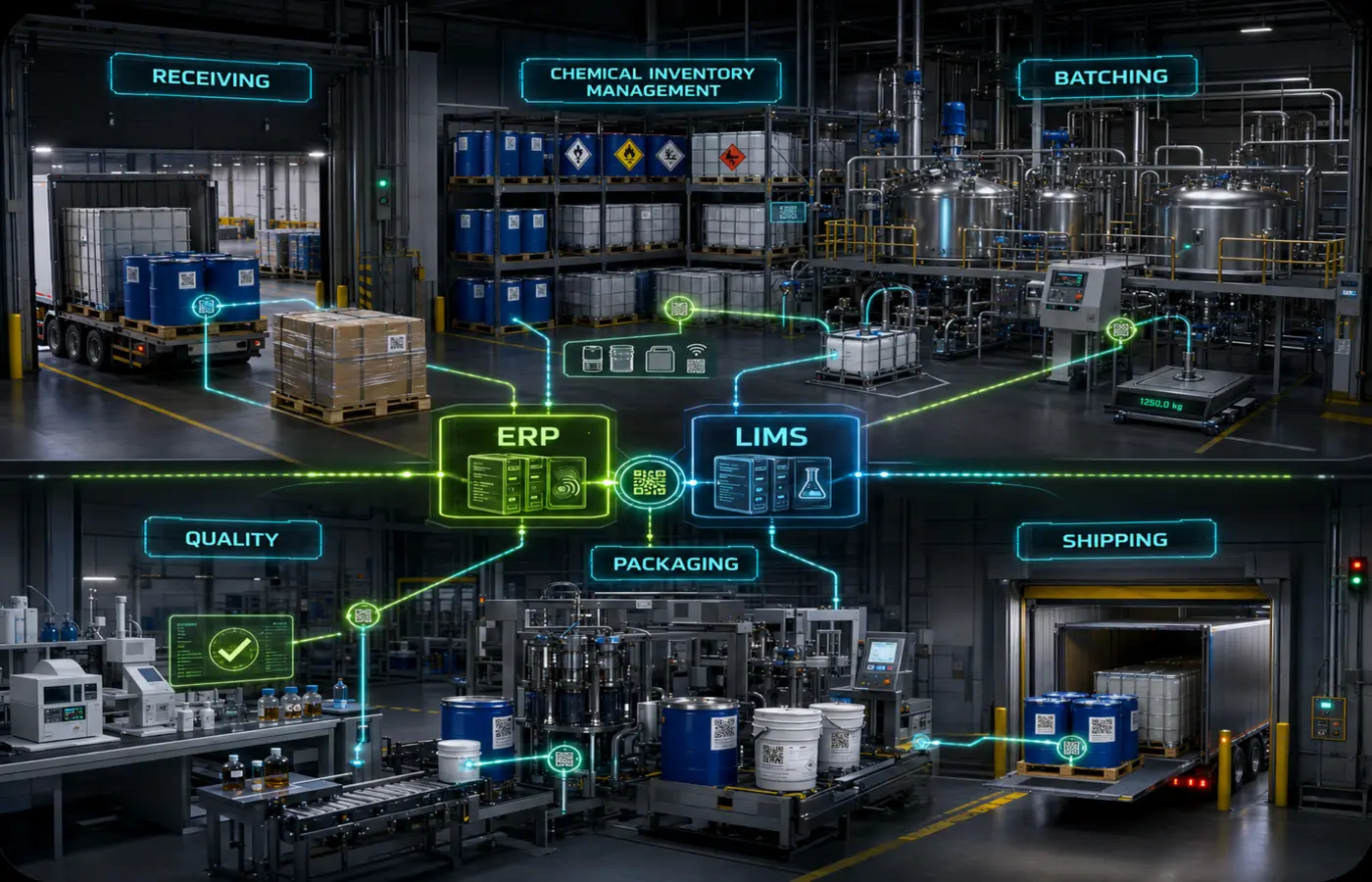
Capture the chemical manufacturing activity your business systems may not see in real time.
ERP platforms often manage purchasing, item masters, formulas, orders, and financial transactions. LIMS platforms manage laboratory samples and results. Important operational details still occur between those systems. Chemicals are received, relabeled, transferred, staged, weighed, dispensed, blended, reacted, sampled, held, packaged, and shipped before every event reaches the appropriate system.
Chemical traceability solutions help close that gap. These chemical traceability solutions allow operators to capture transactions through barcode scanners, RFID readers, rugged mobile devices, shared workstations, label printers, scales, and connected equipment. Selected data can then be validated, transformed, reported, or exchanged with authorized systems.
- Capture: material, labor, equipment, batch, quality, label, container, and shipment activity.
- Control: configured identity, location, status, expiration, quantity, and workflow checks.
- Connect: ERP, LIMS, QMS, reporting, shipping, databases, devices, and customer systems.
- Communicate: current operational status for production, warehouse, quality, planning, and IT teams.
What does KnarrTek record at each stage?
This chemical traceability control matrix shows the information captured during each stage of production and how that record helps your team.
Chemical manufacturing software designed around real material and batch transactions.
KnarrTek chemical traceability solutions can be configured around the identifiers, formulas, routes, quality states, labels, devices, reports, and integrations used by the facility. Each transaction becomes part of a searchable chemical traceability record that supports hazardous material tracking and operational visibility.
Chemical Inventory Management
Track raw chemicals, intermediates, finished products, containers, tanks, totes, drums, rooms, zones, and status-controlled locations.
Batch Traceability Software
Connect source lots, weighed or dispensed material, process steps, outputs, quality decisions, packaged lots, and shipments.
Real-Time WIP Tracking
See batch, work order, route, labor, equipment, material-use, output, yield, scrap, rework, and completion status.
Hazardous Material Tracking
Connect chemical identity, lot, container, storage location, status, movement, use, return, and disposal-related records.
Barcode & RFID Tracking
Use direct barcode confirmation, contactless RFID capture, or hybrid workflows for materials, containers, pallets, and assets.
Quality & Status Records
Make quarantine, sampling, testing, approval, rejection, rework, release, and disposition visible to authorized users.
Labeling & Container Control
Generate and verify configured material, drum, tote, tank, box, pallet, finished-product, and shipment labels.
Automation & Integration
Exchange selected data with ERP, LIMS, QMS, databases, reports, shipping tools, scales, printers, readers, and other systems.
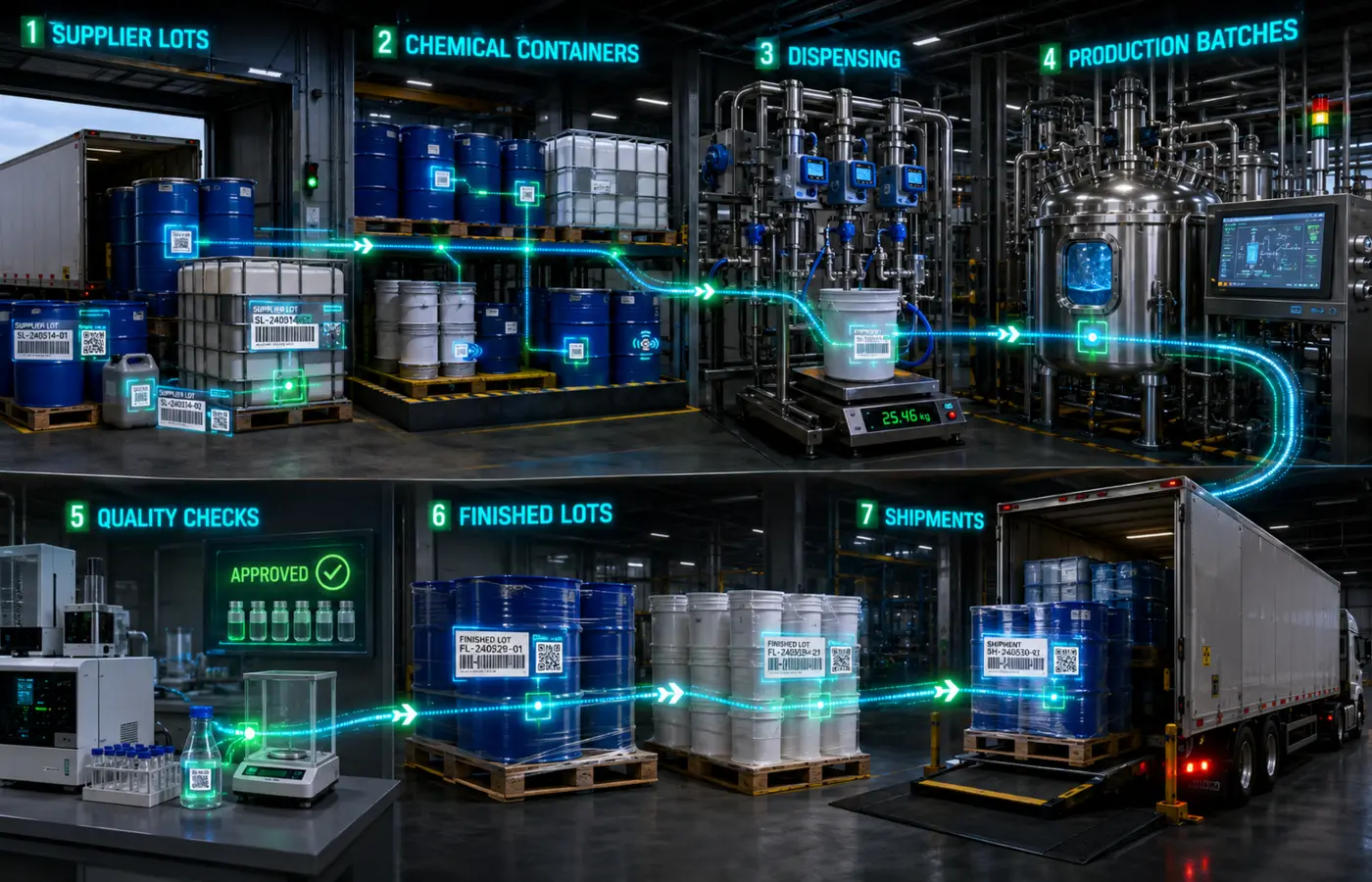
Follow chemical materials from supplier receipt through finished-product shipment.
Chemical traceability solutions are most useful when they preserve every relevant handoff. KnarrTek supports a continuous operational history across warehouse, weighing, dispensing, production, quality, packaging, and distribution activity.
Receive
Capture supplier, order, item, quantity, lot, status, container, and applicable date information.
Store
Track putaway, location, movement, segregation, status, availability, and controlled inventory.
Dispense
Confirm source material, lot, container, batch, operator, target quantity, and actual quantity.
Produce
Connect work steps, labor, equipment, material use, output, yield, scrap, and rework.
Release
Record sampling, results, holds, approval, rejection, release, and disposition decisions.
Ship
Validate finished lots, containers, labels, customer orders, staging, loading, and shipments.
Answer the questions behind a batch investigation without reconstructing the story manually.
Chemical traceability solutions give production teams current batch and material status. Quality needs sampling, hold, deviation, rework, approval, and release history. Warehouse teams need accurate locations, containers, lots, and quantities. EH&S teams need reliable chemical identity and movement information. IT needs controlled interfaces and dependable monitoring. Customer-facing teams need accurate shipment answers.
- Backward trace: identify supplier lots, containers, transactions, people, and equipment associated with a finished lot.
- Forward trace: identify batches, containers, inventory, orders, and shipments associated with a source lot.
- Status trace: review when material entered quarantine, testing, approval, rejection, release, or disposition states.
- Container trace: connect drums, totes, tanks, intermediate containers, packaged units, pallets, and shipments.
- System trace: monitor configured data exchange, alerts, reports, and integration exceptions.
How chemical traceability solutions can support batch production and multi-container inventory.
The following examples illustrate representative workflows based on KnarrTek’s tracking capabilities. They are not named-customer testimonials, guaranteed savings, or claims about a current customer implementation.
Source-lot genealogy from receiving through packaged finished product
A specialty chemical operation needs to replace paper travelers and disconnected spreadsheets while linking source material, dispensing, batch production, quality status, packaging, and shipment.
- Capture supplier lots, storage containers, movement, weigh or dispense activity, operators, and production batches
- Track intermediate output, yield, rework, quality status, packaged containers, labels, pallets, and shipments
- Exchange selected item, order, inventory, batch, and shipment updates with ERP, LIMS, or reporting systems
A connected batch record can reduce manual reconstruction and help authorized teams answer source-lot, inventory, quality-status, and customer-shipment questions more efficiently.
Discuss a Similar WorkflowContainer, status, location, and lot visibility across storage and shipping
A chemical supplier or processor needs chemical inventory management across drums, totes, tanks, pallets, storage zones, production staging, and customer orders.
- Track container identifiers, contents, lot, quantity, location, ownership, status, expiration or retest date, and movement
- Use barcode and RFID tracking for receiving, transfer, staging, issue, return, cycle count, picking, packing, and shipment
- Validate configured product, container, order, label, destination, and shipment relationships before dispatch
Current container and lot records can reduce time spent searching for material, reconciling delayed spreadsheets, and tracing which inventory or shipments are associated with a specific lot.
Discuss a Similar WorkflowActual results depend on workflow design, implementation scope, data quality, integrations, devices, infrastructure, procedures, training, security, and user adoption.
Support traceability, labeling, inventory, and recordkeeping initiatives with accurate operational data.
Chemical traceability solutions do not classify hazards, author safety data sheets, certify ISO 9001 or REACH compliance, replace process-safety controls, or determine whether a regulatory requirement applies. KnarrTek can help chemical manufacturers maintain structured material, batch, user, quality-status, label, container, and shipment records within their broader operational and compliance programs.
Connect configured chemical identities, labels, containers, locations, and transaction records with operational workflows. Hazard classification and SDS responsibilities remain with the regulated organization.
Maintain production, material, site, quantity, and use-related operational data that may support internal reporting processes where applicable. Regulatory applicability and submissions remain the manufacturer’s responsibility.
Strengthen lot genealogy, status history, user activity, labels, and searchable records that can support an organization’s quality system and applicable supply-chain obligations.
Match the software deployment to the depth of chemical inventory, batch, and integration control required.
KnarrTek chemical traceability solutions include cloud, on-premise, and connected operations packages for different levels of chemical inventory management, batch process management, traceability, automation, integration, and monitoring.
BellHawk Online
Browser-based inventory, production, labor, material, barcode, asset, and job-activity tracking for teams that want practical visibility without a large IT project.
WIPtracker
MES and WMS workflows for WIP, inventory, batch traceability, quality status, labeling, job records, barcode, RFID, and in-facility operations.
SmartOps24x7
Rules-based automation, alerts, data exchange, ERP and LIMS integration, transformation, reporting, and monitoring for complex software environments.
Adaptable for specialty, batch, process, blending, packaging, and distribution operations.
Chemical traceability solutions can support make-to-stock, make-to-order, batch, continuous, toll, contract, and hybrid operations. Workflows can be configured around each facility’s identifiers, controls, devices, processes, labels, and customer requirements.
Specialty Chemicals
Connect source lots, formulas, dispensing, batches, quality status, packaging, labels, and customer shipments.
Coatings, Adhesives & Sealants
Track ingredients, colors, viscosities, batches, containers, tests, packaged units, and customer requirements.
Industrial Blending
Monitor raw materials, tank or mixer assignment, weighment, blend steps, yield, sampling, release, and transfer.
Toll & Contract Processing
Separate customers, owner inventory, materials, work orders, formulas, labels, reports, and finished-product records.
Cleaning & Process Chemicals
Connect ingredient lots, batching, filling, container identity, quality status, labeling, pallets, and distribution.
Resins, Polymers & Additives
Maintain raw-material genealogy, process history, intermediate lots, test status, packaging, and shipment records.
Chemical Warehousing
Improve container, location, lot, status, quantity, expiration, allocation, picking, packing, and shipping visibility.
Repackaging & Distribution
Connect source containers, transfers, new containers, labels, lots, quantities, pallets, orders, and shipments.
Explore the tracking capabilities behind chemical manufacturing control.
Review KnarrTek capability pages covering real-time WIP tracking, chemical inventory management, RFID tracking, material genealogy, barcode capture, and job tracking in greater detail.
Manufacturing Tracking
Connect work orders, WIP, inventory, source materials, labor, lots, labels, quality, and shipments.
Explore CapabilitiesReal-Time WIP Tracking
Track work location, status, materials, labor, route progress, holds, scrap, rework, and completions.
View WIP TrackingInventory & Asset Tracking
Improve visibility across receiving, putaway, locations, containers, transfers, staging, picking, and shipping.
View Inventory TrackingRFID Tracking
Use contactless reads for faster material, container, pallet, asset, and high-volume movement capture.
View RFID TrackingMaterials Traceability
Connect lots, batches, serial numbers, source materials, work, quality checks, labels, containers, and shipments.
View Track & TraceMaterials Flow & Job Tracking
Monitor job progress, labor, process steps, material usage, WIP movement, and completion status.
View Job TrackingAnswers for chemical operations, production, quality, warehouse, EH&S, and IT teams.
These direct answers help buyers compare chemical traceability solutions, chemical manufacturing software, batch traceability software, hazardous material tracking, chemical inventory management, labeling, and ERP or LIMS integration.
What do chemical traceability solutions track?
How does batch traceability software work?
Can KnarrTek integrate with ERP and LIMS systems?
Does KnarrTek replace an ERP, LIMS, QMS, or EH&S platform?
Does KnarrTek support barcode and RFID tracking?
Can KnarrTek track chemical status and expiration dates?
Can chemical inventory management track drums, totes, and tanks?
Can the software run in cloud, on-premise, or connected environments?
Which chemical manufacturers are a good fit for KnarrTek?
Can KnarrTek create GHS labels or connect with label systems?
How quickly can teams search lot or batch history?
Can KnarrTek track labor, equipment, and material usage together?
Can WIPtracker capture data when internet connectivity is limited?
How does a chemical manufacturing implementation begin?
Turn disconnected material and batch activity into a searchable operational record.
Start with the operational problem. KnarrTek can help map the materials, transactions, identifiers, containers, devices, users, labels, reports, alerts, controls, and integrations needed to build chemical traceability solutions around your actual facility.
