

Textile Manufacturing Traceability Software for Production and Inventory Visibility
Textile manufacturers operate complex, high-volume environments spanning raw material sourcing, spinning, weaving or knitting, dyeing and finishing, warehousing, and distribution — and running that on spreadsheets and disconnected systems slows decisions and drives waste, errors, and delays. KnarrTek's textile manufacturing traceability software — BellHawk and MilramX — gives mills and finishers one real-time record of fibers, yarns, dyes, fabrics, and finished goods across every production stage, including roll conversion down to the cut piece, so teams get the visibility they need to cut inventory waste and keep orders moving — on-premise, offline, or across multiple facilities.
What KnarrTek actually does for textile manufacturing operations
KnarrTek's BellHawk and MilramX platforms give textile manufacturers software tools for material traceability, work-in-process tracking, asset visibility, and workflow coordination — supporting operations across apparel, home textiles, technical fabrics, nonwovens, and industrial textile applications. Digitizing tracking activity and consolidating operational data gives manufacturers clearer insight into inventory levels, production status, and process flow across every manufacturing stage.
Real-Time Production & WIP Visibility
Track materials and orders from raw material intake through spinning, weaving or knitting, dyeing, finishing, and shipment, with visibility into bottlenecks and handoffs between stages.
Materials & Roll Traceability
Barcode and RFID-based data capture, including roll conversion, follows fibers, yarns, dyes, and fabrics with precise lot-level traceability from receiving to finished goods.
Asset & Equipment Visibility
Looms, spinning frames, dyeing vessels, and inspection tools are tracked for location and status, supporting scheduling and maintenance planning.
Multi-Facility Coordination
MilramX connects BellHawk data with ERP, production planning, quality, and supply chain applications, reducing manual data entry across distributed operations.
The visibility gaps textile manufacturers deal with today
Fragmented visibility across production facilities, warehouses, and supplier networks makes it difficult to understand true inventory positions, production status, and resource availability in real time — and manual, paper-based tracking only compounds the problem as supply chains grow more complex.
Limited Visibility Across Stages & Facilities
Without centralized tracking, manufacturers struggle to see where fibers, yarns, fabrics, and work-in-process reside across spinning, weaving, dyeing, and finishing operations.
Manual Tracking & Process Inefficiencies
Spreadsheets and paper logs increase administrative effort and introduce errors across inventory, production status, and material movements.
Cross-Team Coordination Gaps
When production, quality, warehousing, and planning teams work from different information, handoffs slow down and delays multiply.
Documentation & Traceability Requirements
Consistent records for quality review, internal audits, and operational accountability are hard to maintain without a digital system behind them.
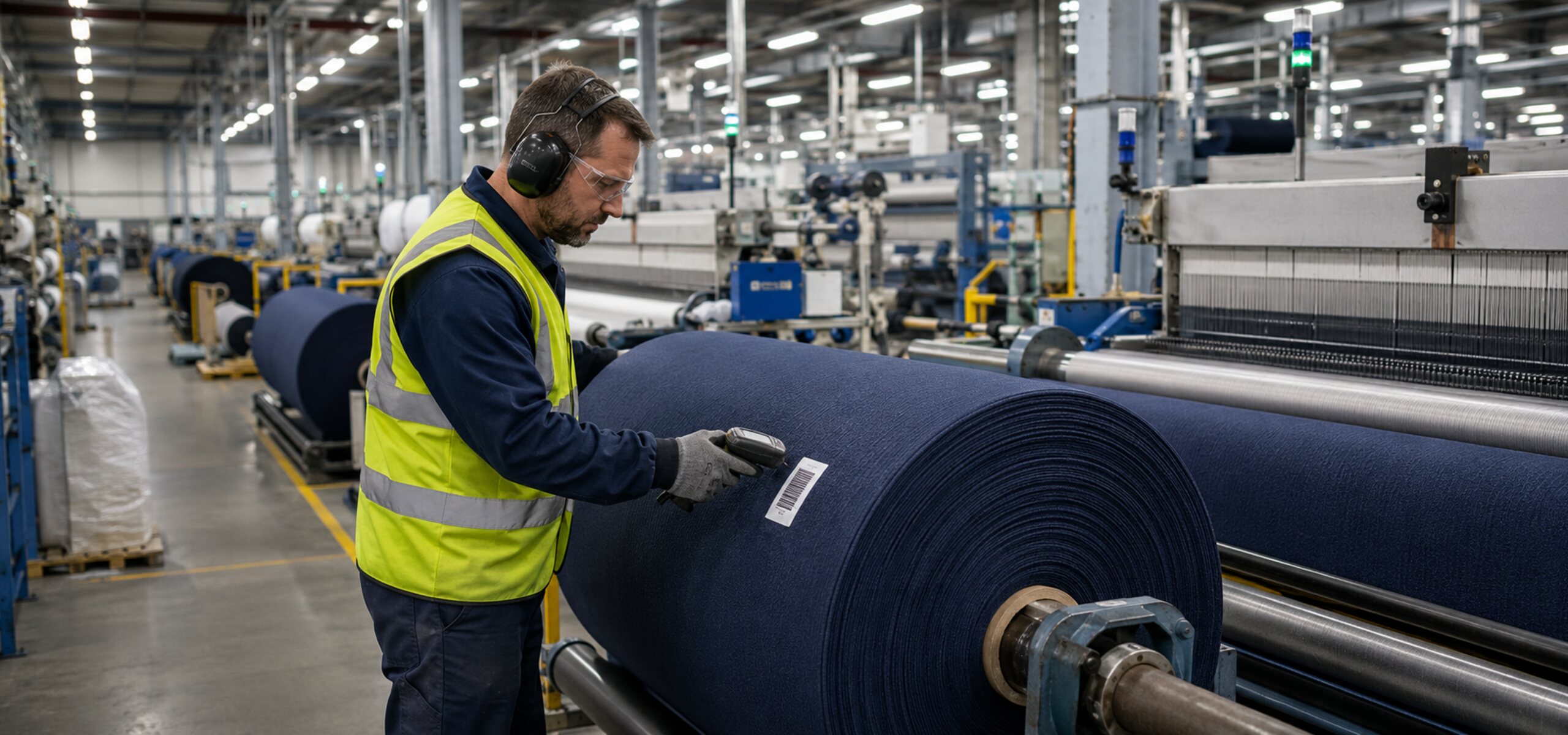
What BellHawk does for textile manufacturing operations
BellHawk enables textile manufacturers to track materials and orders from raw material intake through spinning, weaving or knitting, dyeing, finishing, packaging, and shipment — with visibility into work-in-process that helps teams identify bottlenecks and coordinate handoffs between production stages.
Production & WIP Tracking
Follow materials and orders through every production stage, with current job status visible instead of assumed.
Materials Traceability & Inventory
Traceability for fibers, yarns, dyes, and chemicals across storage, production, and outbound logistics, with material status visible as on hand, allocated, in process, or shipped.
Asset, Tool & Equipment Tracking
Location and status tracking for looms, spinning frames, dyeing vessels, and inspection tools supports scheduling and availability awareness.
Barcode & RFID Tracking
Scanning rolls, batches, and containers reduces manual entry and supports timely updates across connected systems.
Roll Conversion & Cut-Piece Tracking
Advanced roll conversion capabilities manage the transformation of large fabric rolls into cut pieces, sewn components, or custom widths while maintaining precise lot-level visibility for quality and compliance.
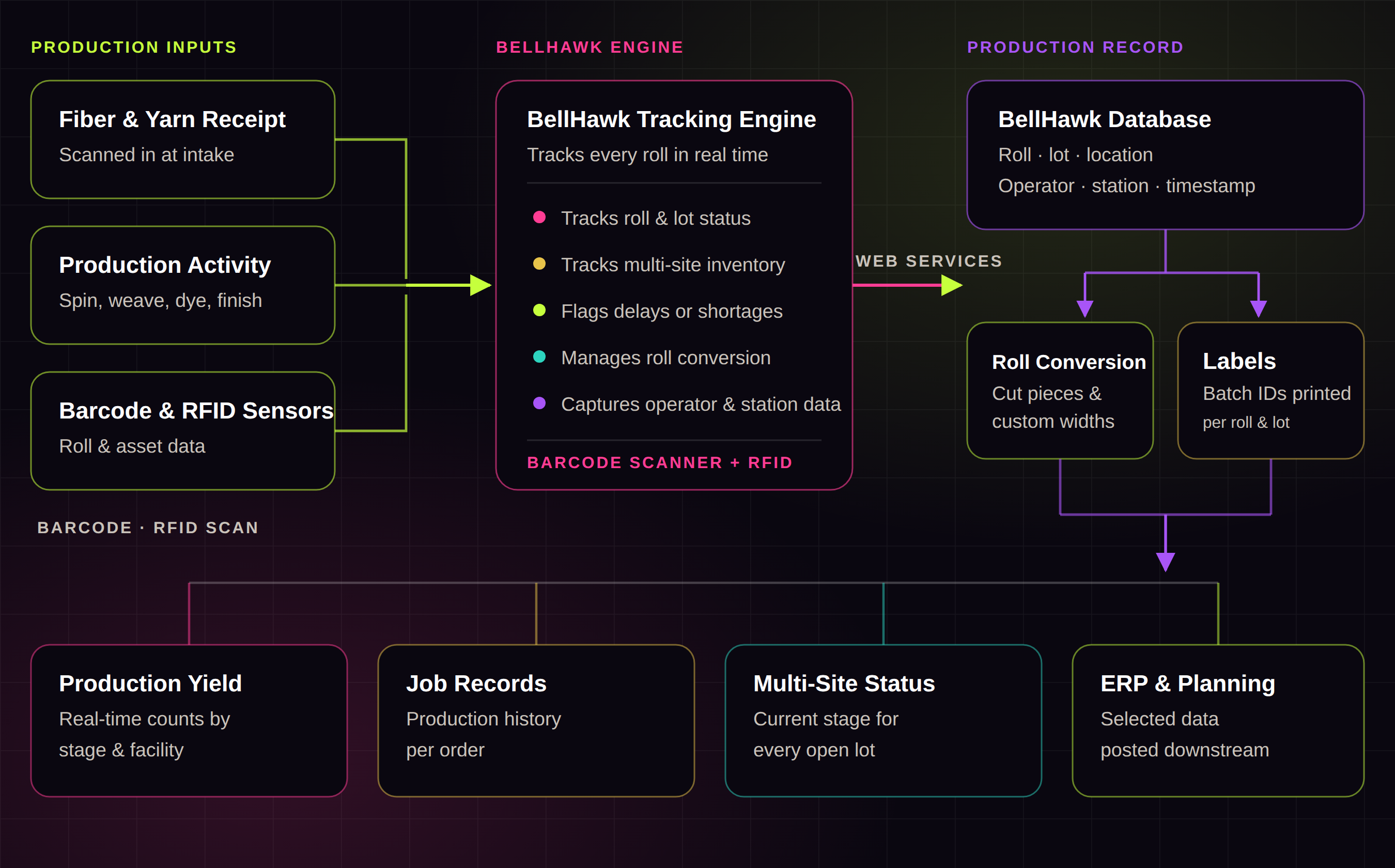
From raw material receiving to full production visibility, in real time
BellHawk supports real-time tracking of fibers, yarns, dyes, fabrics, and production activity using barcode and RFID-based data capture — including roll conversion capabilities that manage the transformation of large fabric rolls into cut pieces, sewn components, or custom widths while maintaining precise lot-level traceability. MilramX extends this foundation with workflow automation and data integration across ERP systems, production planning tools, quality processes, and supply chain applications, helping centralize information and reduce manual data entry throughout the production lifecycle.
- Barcode and RFID capture across receiving, production, and outbound logistics.
- Roll-level and lot-level visibility maintained through roll conversion into cut pieces.
- Real-time WIP and inventory status visible across every production stage.
- Asset and equipment tracking for looms, dyeing vessels, and inspection tools.
- Rules-based alerts flag inventory thresholds, delays, or quality exceptions.
- Data synchronized to ERP, production planning, and quality systems via MilramX.
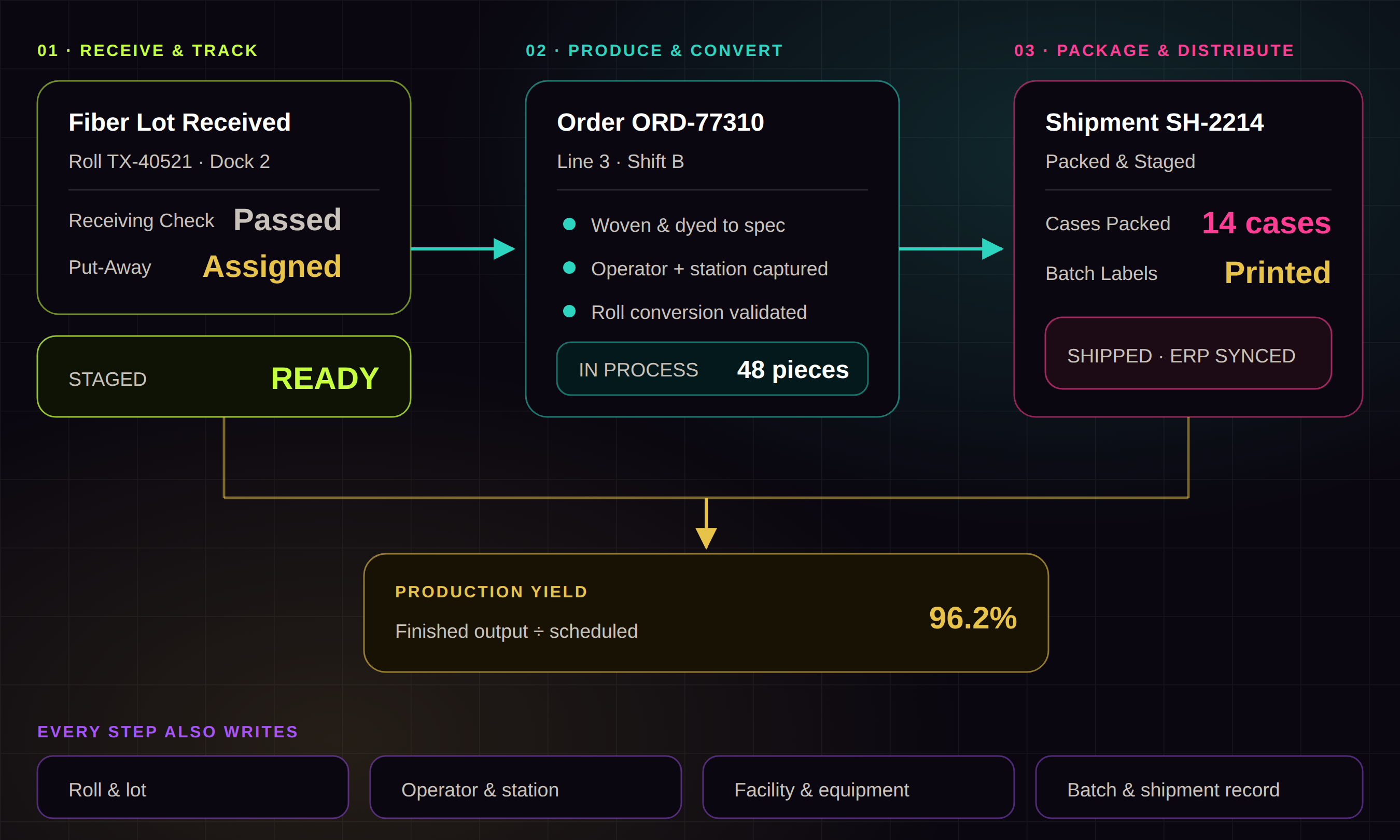
What happens to a lot as it moves through production
Each of these stages is a real sequence a BellHawk-enabled textile operation follows, and each one writes to the production record — so inventory stays accurate end-to-end and downstream systems stay current automatically instead of by hand.
Receive & Track
Fibers, yarns, dyes, and chemicals are scanned at receiving and tracked through storage with lot and location recorded.
Produce & Convert
Spinning, weaving or knitting, dyeing, finishing, and roll conversion into cut pieces are captured with barcode and RFID scans at every step.
Package & Distribute
Finished goods are labeled, batch-identified, and synced to ERP and reporting systems as shipments move out the door.
Deployment flexibility for diverse textile manufacturing environments
Textile manufacturers operate in a wide range of physical and technical environments, from centralized mills to distributed finishing operations and multi-site supply networks. KnarrTek's solutions adapt to these conditions without disrupting ongoing production.
On-Premise Deployment
BellHawk and MilramX can be deployed on internal servers for manufacturers that prefer to manage systems within existing IT environments, well suited to proprietary processes and established legacy systems.
Offline Data Capture
Mobile devices support offline data capture on the production floor, letting operators scan materials and record production steps without interruption. Captured data syncs once connectivity is restored.
Hybrid Configurations
Collect data locally on production floors while sharing consolidated dashboards across departments and locations, accommodating local infrastructure constraints.
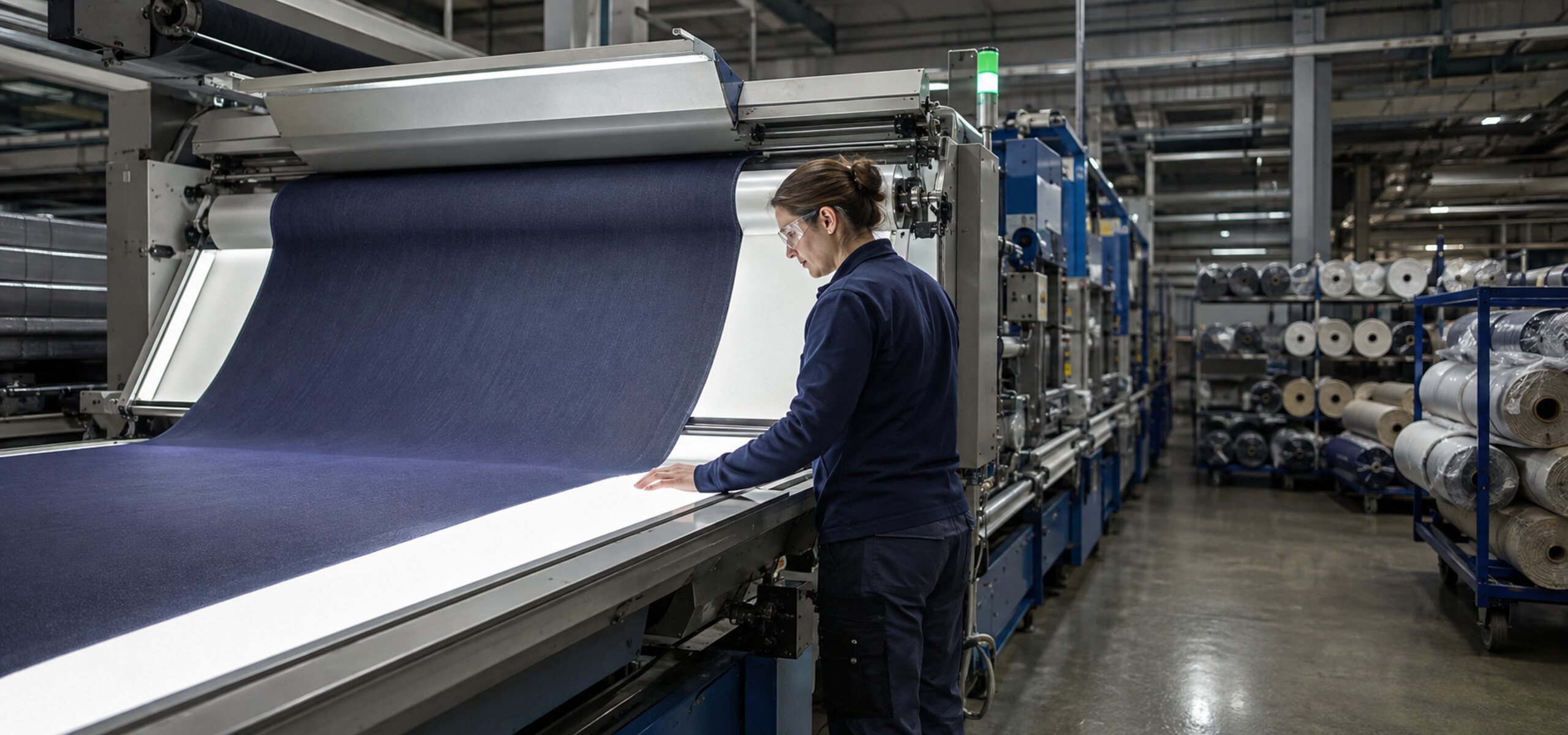
Where MilramX extends BellHawk with automation
MilramX is a real-time, rules-based decision support platform that enhances supply chain coordination and data exchange. Built on the Microsoft stack, MilramX integrates with BellHawk and systems like ERP, QuickBooks, or Oracle so managers get actionable information without manual reconciliation.
Rules-Based Alerts & Workflow Automation
Configure notifications for inventory thresholds, production delays, or quality exceptions, with automated workflows for approvals, material movements, or status updates.
Data Visibility for Leadership
Consolidated data from multiple sources provides operational views into throughput, yields, and production trends to support planning and continuous improvement.
ERP, Planning & Scheduling Integration
Integrates BellHawk data with ERP systems, MES platforms, quality tools, and other enterprise applications, reducing duplicate data entry.
Why textile manufacturers choose KnarrTek
BellHawk and MilramX help manufacturers reduce errors, improve workflow coordination, and maintain operational clarity as textile operations scale from smaller production runs to larger, multi-site environments.
Real-Time Visibility
Track raw materials from receipt through processing and finishing, with production status visible as it happens rather than reconstructed after the fact.
Reduced Inventory Waste
Aligning inventory levels with production plans and demand signals helps manufacturers avoid overproduction, shortages, and excess stock sitting idle.
Audit-Ready Documentation
Generate reports that support quality reviews and internal audits, with consistent labeling and batch identification built into every record.
Stronger Team Coordination
Shared, real-time information improves collaboration between production, quality, and supply chain teams, reducing miscommunication and delays.
Roll-Level Lot Visibility
Roll conversion into cut pieces, sewn components, or custom widths keeps precise lot-level visibility intact for quality assurance.
Scalable Growth
The platforms accommodate increased production volumes, additional product lines, and more complex workflows without disruptive changes to existing processes.
Two ways textile manufacturing software is deployed
BellHawk and MilramX support a range of deployment shapes. These are representative patterns rather than a specific manufacturer's results, described so you can recognize which one resembles your own operation.
One production record from fiber to finished roll
Spinning, weaving, dyeing, and finishing all write into the same record, so a finished roll's full history is one lookup away instead of a walk across four departments.
A mill running spinning, weaving or knitting, dyeing, and finishing under one roof deploys BellHawk to track materials and WIP across every stage, with roll conversion capturing lot-level detail as rolls become cut pieces. MilramX consolidates yield and throughput data for operations leadership across the full production line.
Fewer handoff delays between departments, clearer yield and waste visibility, and less time spent reconstructing a roll's history from paper logs.
Consistent visibility across finishing sites and a central warehouse
Dyeing and finishing at one facility, cutting and packaging at another, and one dashboard that shows leadership what's happening at both.
A manufacturer running separate finishing and distribution facilities deploys BellHawk at each site for materials and asset tracking, with mobile devices supporting offline capture where floor connectivity is limited. MilramX consolidates inventory and production data across sites into shared dashboards without requiring a single unified network.
One consolidated view of inventory and production across facilities, faster identification of bottlenecks, and less manual reconciliation between sites.
These are representative application patterns, not guaranteed outcomes. Actual results depend on facility scope, product mix, network availability, process design, implementation scope, data quality, integrations, procedures, training, and user adoption.
Three ways to run textile manufacturing software
BellHawk and MilramX are the textile manufacturing software underneath KnarrTek's product line, delivered as three packaged options. Which one fits depends on how much of your operation runs through the system and how much automation you want around exceptions.
BellHawk Online
Browser-based real-time tracking for inventory, production activity, and barcode scans, without replacing your ERP or accounting platform. Material status and job progress are visible the moment they're scanned, with no local server to maintain.
WIPtracker
In-facility WIP and materials control covering receiving, production, roll conversion, and barcode and RFID data capture — the deeper on-site foundation textile manufacturers use for full production control.
SmartOps24x7
ERP integration and smart operations monitoring built around KnarrTek's MilramX agents, adding rules-based alerts, 24/7 system oversight, and automated data exchange across connected systems.
Textile tracking is one part of a larger record
BellHawk's textile manufacturing software works alongside the other ways KnarrTek collects data at the point of work. Most deployments combine two or three of these.
Real-Time WIP Tracking
Work-in-process visibility across all sites, so a facility's status is always current wherever it sits.
WIP trackingInventory & Asset Tracking
Accurate inventory and asset visibility across your facility, the record that every production transaction posts into.
Inventory trackingRFID Inventory System
RFID technology that streamlines and automates inventory tracking where barcode scanning alone is impractical, such as bulk roll moves.
RFID trackingTrack & Trace Materials
Materials traceability software that makes it easy to track and trace fibers, yarns, and fabrics from receiving to shipping.
Materials traceabilityMaterials Flow & Job Tracking
Material flow and job progress monitored throughout production, giving work-in-process transactions their operational context.
Job trackingCommon questions about running a textile operation on KnarrTek
Practical answers about KnarrTek's textile manufacturing solutions — BellHawk, MilramX, and what actually changes on the production floor once a facility starts using them.
What kinds of textile operations does this support?
What is roll conversion, and why does it matter?
Can this track materials by lot and roll number?
Does BellHawk work on the production floor without a live connection?
Can this track equipment like looms and dyeing vessels?
What's the difference between BellHawk and MilramX?
Can this integrate with our ERP or MES platform?
What deployment options are available?
Can this support quality reviews and internal audits?
Can this scale from a single facility to multiple sites?
How does this reduce inventory waste?
Does this replace our existing systems?
Ready to improve visibility and control across your textile operations?
Click the button, complete the form, and learn how BellHawk and MilramX can support your manufacturing environment — on-premise, offline, or across multiple facilities.
